
select links from 2026-01-03
Welcome to the year partition of 2026! How AI will do BI, Sam Rose's interactive visuals

Hello friends! The end of the year presented itself with a lack of content to share as well as a surprisingly large amount of work so I took a small hiatus. But I’m back and I am looking forward to growing this little nook of the internet.
Where is BI headed?
So business intelligence is on the cusp of changing - I’m not exaggerating. I started working with data on a professional level in 2015. Back then, data cubes were still pretty prevalent, now you could probably go through your career without touching one. LLMs in BI tools have been around for two years or so now? I’m pretty sure the tooling will continue evolving and change over the next decade.
The question I have on my mind is – how does that influence my data strategy? What do I continue investing in, what do I stop doing? Chris Webb and Katie Bauer share their thoughts on their respective blogs. Katie shares a sentiment I’ve been floating inside my company during the past month:
The first: for most people, data plays a purely supportive and operational role in their day-to-day work. At any given moment, someone’s priorities are probably already set, shaped more heavily by their functional role or their boss than any chart they they looked at.
A dashboard in and of itself is useless. Every data tool we build serves as a step in the employee’s workflow. As data professionals, we need to think in terms of what ultimately is the job of the employee. But understanding intent isn’t straightforward - most of the time we are asked to pull data or create a report. I would wager this behavior wouldn’t change in terms of LLMs. AI would still struggle without the “jobs to be done” point of view. Because of this, I don’t think slapping a chat interface on top of a semantic model creates a lot of value for the business user.
HOWEVER, I think it’s gonna be useful for the report developer! We spend a lot of time fiddling with dozens of chart settings and aligning pixels - things that can be easily automated and easily verified by a data professional! Instead of the apocryphal self-service paradise, BI work is moving up the abstraction chain. The LLM creates the draft version of your report and you, the data professional, come in to give your finishing touches based on institutional knowledge. You could compare this to using ggplot2 to create an svg chart and then using Adobe Illustrator to touch up.
If this were true, the next best investment is in the tooling - do you have custom libraries for your routine work, do you have boilerplate code conventions? How much of what you do is documented, versioned and discoverable? That’s where I’m spending my team, we’ll see how it goes!
Beautiful visual explainers
I haven’t heard of Sam Rose but he’s amazing! This visual essay on how LLMs work is brilliant - it’s something I’ll probably share in my work environment, you should too! 10/10, no comments.
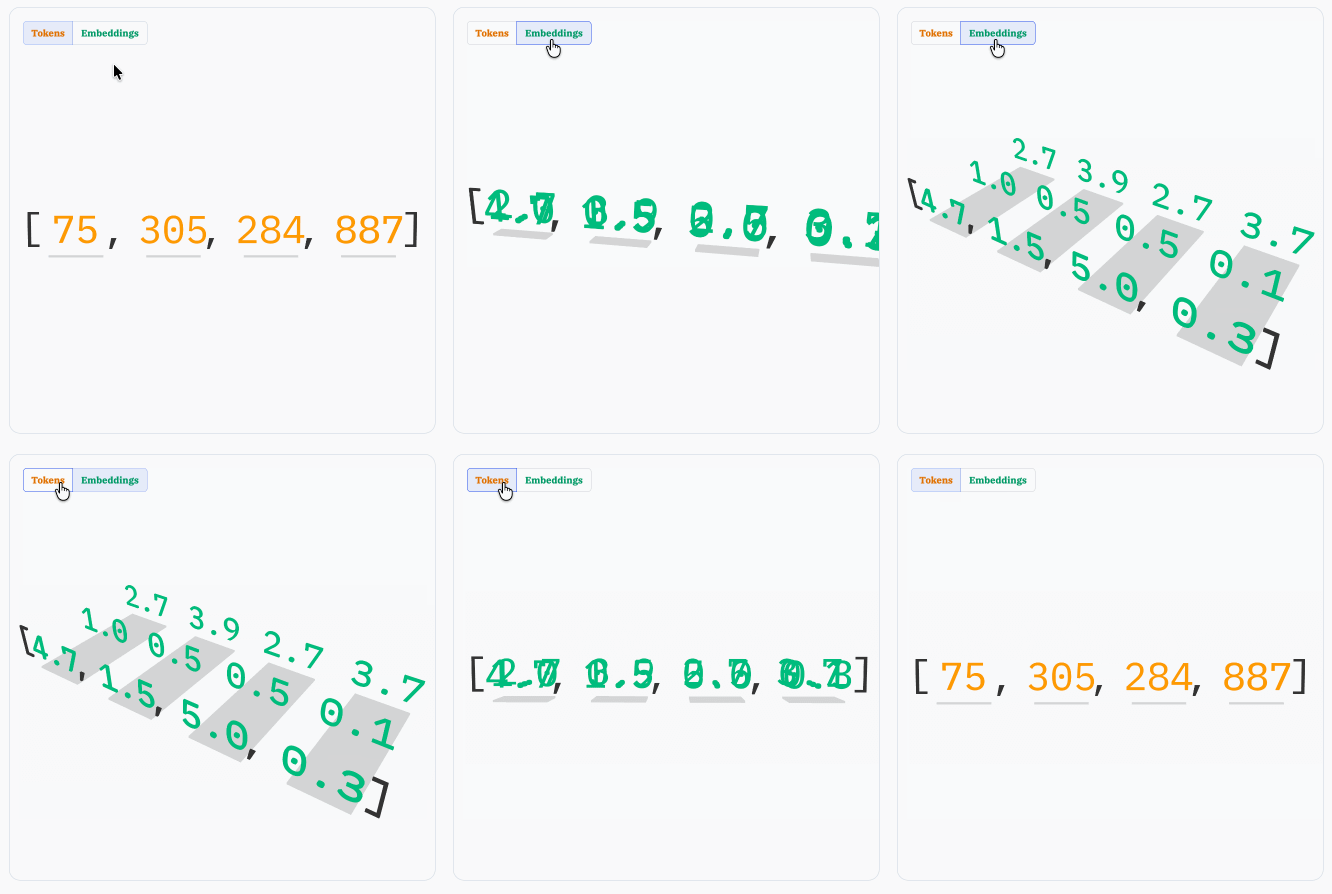
His previous visual explainers are awesome as well, check them out.
Other links
Best Data Visualization Projects of 2025 by Nathan Yau
R + Python: From polyglot to pluralism by Emily Riederer
How uv got so fast by Andrew Nesbitt
Mimoune Djouallah shows you can do data engineering with pure SQL