
select links from 2025-10-26
DAX, Ducks, Stacks of regressions!

DaxLib.SVG
DaxLib.SVG is a package by Jake Duddy that makes it easier to crate SVG objects in Power BI. Power BI is notoriously lacking in the visuals department so BI developers sometimes resort to SVGs to create visuals that would otherwise be impossible. However, up until now, you had to roll your own SVG for each different KPI, making the process VERY cumbersome.
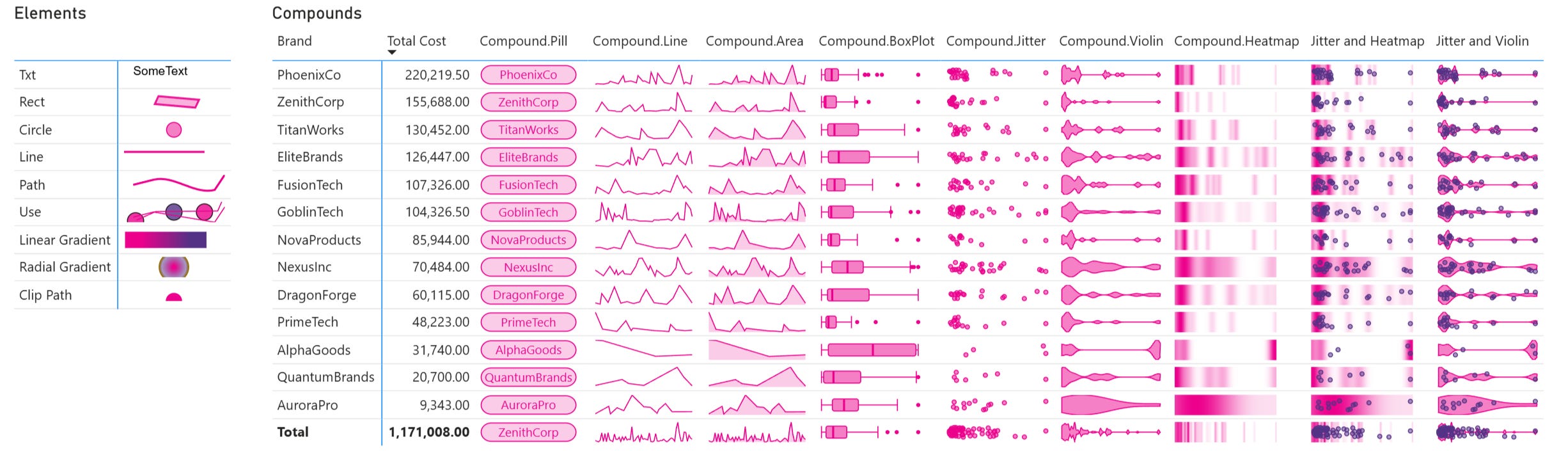
Luckily, Microsoft recently announced DAX User Data Functions (UDFs) that allow you to define reusable code chunks. DaxLib.SVG leverages this and offers a collection of UDFs - essentially, you add the UDFs to your Power BI file and then call them wherever needed. I personally avoided using SVGs because I like my DAX definitions short and clean and SVGs are anything but short. With UDFs I might just change my mind!
DuckDB 1.4
I’m a fervent fan of DuckDB - if your data team is not using DuckDB, stop everything and set aside time to adopt it. DuckDB 1.4 dropped last month and announcement blog post skips a really neat feature - support for vector tiles. This looks like a great tool in your toolbox when working with geospatial data. Here are two resources about this release:
Bart Zwemmer’s blog post DuckDB Vector Tiles Demo
Kyle Walker’s BlueSky thread:
How I, a non-developer, read the tutorial you, a developer, wrote for me, a beginner
Just read this, 10/10, no comments.
3.6B regressions
So apparently someone published a paper recently doing a “multiverse analysis” which basically means running 3.6 billion regression models with varying “estimation strategies, covariates, operationalizations, and samples”. Katrin Auspurg recently published a paper “Robustness is better assessed with a few thoughtful models than with billions of regressions” arguing that most of the models would be unjustified and instead we need to run robustness checks and only use justified ones.
Normally, I would probably just say “duh” and move on but this paper sparked a great discussion on BlueSky with a lot of links to other resources:
If you’re interested in statistics, I suggest you click on Frank’s thread and then browse around the responses. This is a great example of what Twitter was in the 2020s - a rabbit hole of resources to read. Simply browsing the rabbit hole won’t make you smarter but it will give you the lay of the land and help you understand what truly matters to other experts in the field. All that’s left is to open the links and read read read.
Other links
50 Cent adjusted for inflation